
Checking Criminal History in Danbury
Start with Danbury Police when you need a city-created report or a recent arrest entry. Move to the Connecticut Judicial Branch for a filed criminal case. Use DOC for present state custody and SPBI for an official Connecticut conviction history. No Danbury county office combines those sources.
Good identifiers matter. Gather the person's full name and date of birth, plus an incident number, arrest date, or docket number when available.
- Review the Danbury weekly arrest-log period for a recent adult arrest.
- Request the police report from Records and Property by incident or CFS number.
- Search pending and disposed cases in the Judicial Branch lookup.
- Check DOC if continuing custody is the question.
- Order an SPBI history when an official Connecticut conviction record is needed.
Danbury Police Records at Main Street
The Danbury Police Records and Property Division is at 375 Main Street. It maintains accident reports, incident reports, arrests, permits, local criminal-history requests, and property records. The task-specific lines are useful: accidents at 203-797-4660, incidents at 203-797-4681, other records at 203-797-4679, property at 203-796-1647, and the administrative manager at 203-797-4680. The main nonemergency number is 203-797-4611.
Those direct lines should not be flattened into one switchboard contact. An accident copy, an incident narrative, and property held after an arrest are different tasks. Give staff the incident or CFS number when known. If no number is available, provide a tight date range, location, and the specific record sought. That detail helps Records locate the right Danbury file and identify any disclosure limits.
The official police page shows the city agency and its service links.
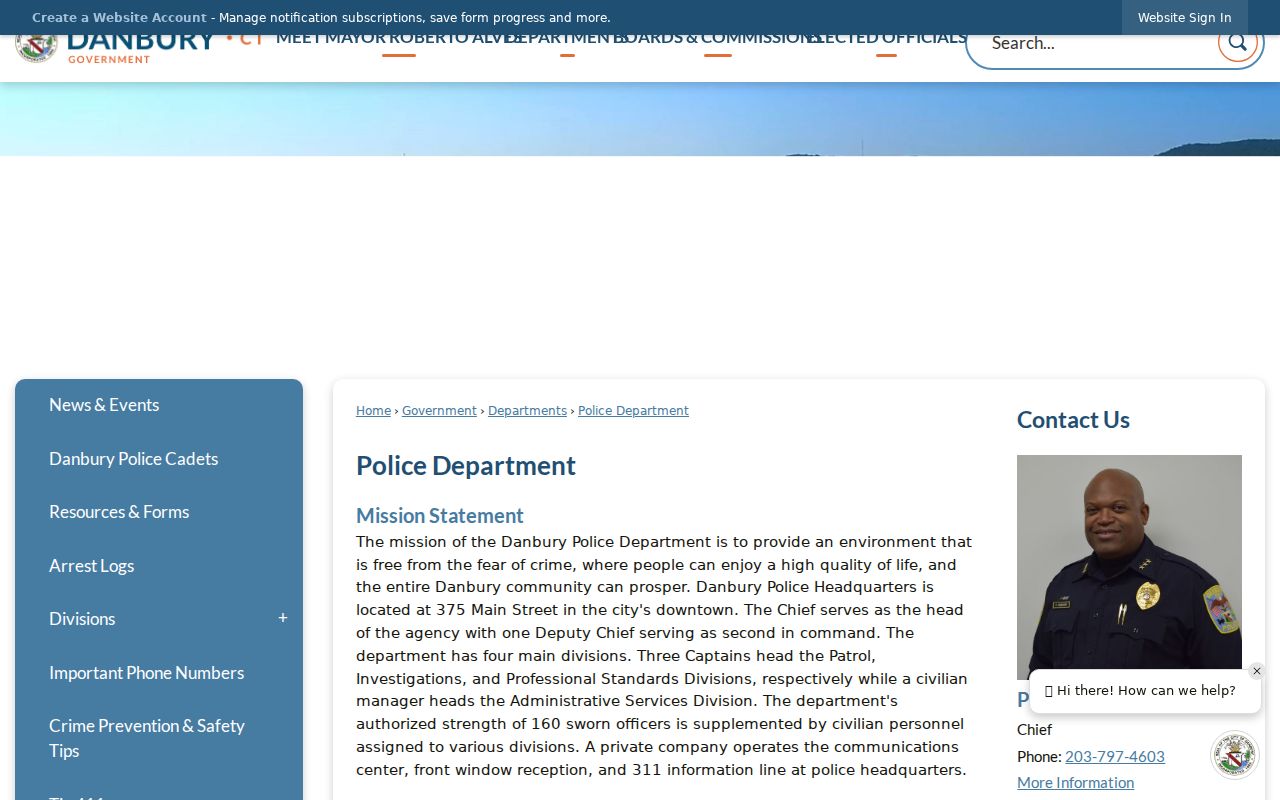
Use 911 only for an emergency, never as a records line.
Danbury Police Department Records
The current DPD FOIA form supports an incident or CFS number, date range, and a description of the exact material sought. Requests can be delivered in person, by email, or by mail. An older city-hosted form lists pd-records@danbury-ct.gov and legacy copy amounts, but the current form omits that fee schedule. Confirm any charge before relying on the older figures.
A focused request performs better than “all records.” Name the accident report, incident narrative, arrest report, photo, video, or other item and give the known date. Connecticut FOIA does not guarantee release of exempt or protected evidence, and DPD may redact a responsive copy.
Danbury Weekly Adult Arrest Log
The Danbury Arrest Logs page publishes weekly PDFs. Each document has a covered period and a run date, so search by the arrest date rather than the upload date alone. An entry can include the incident number, arrest date and time, alleged statutory charges, a count field, a scheduled court date, and demographic data.
“CNTS” means the quantity of counts, not separate arrest events. Several charges may sit under one incident. The log does not establish guilt, the charge a prosecutor ultimately filed, present custody, or final disposition. It also does not include a standard mugshot for each listed arrest.
Danbury Arrests and Bookings
Danbury Police can process and temporarily hold an arrestee, but the city has no public long-term jail roster. Continued detention moves into Connecticut's unified Department of Correction. Bridgeport Correctional Center serves Danbury Superior Court. A person may appear in DOC while accused and awaiting trial, so a locator match must not be described as a conviction.
The police log, court docket, and DOC feed update on different schedules. Release or transfer can happen before the nightly public custody data changes. For bond context, the Danbury courthouse Bail Services line is 203-207-8715.
The official Bridgeport facility page explains this state custody role.
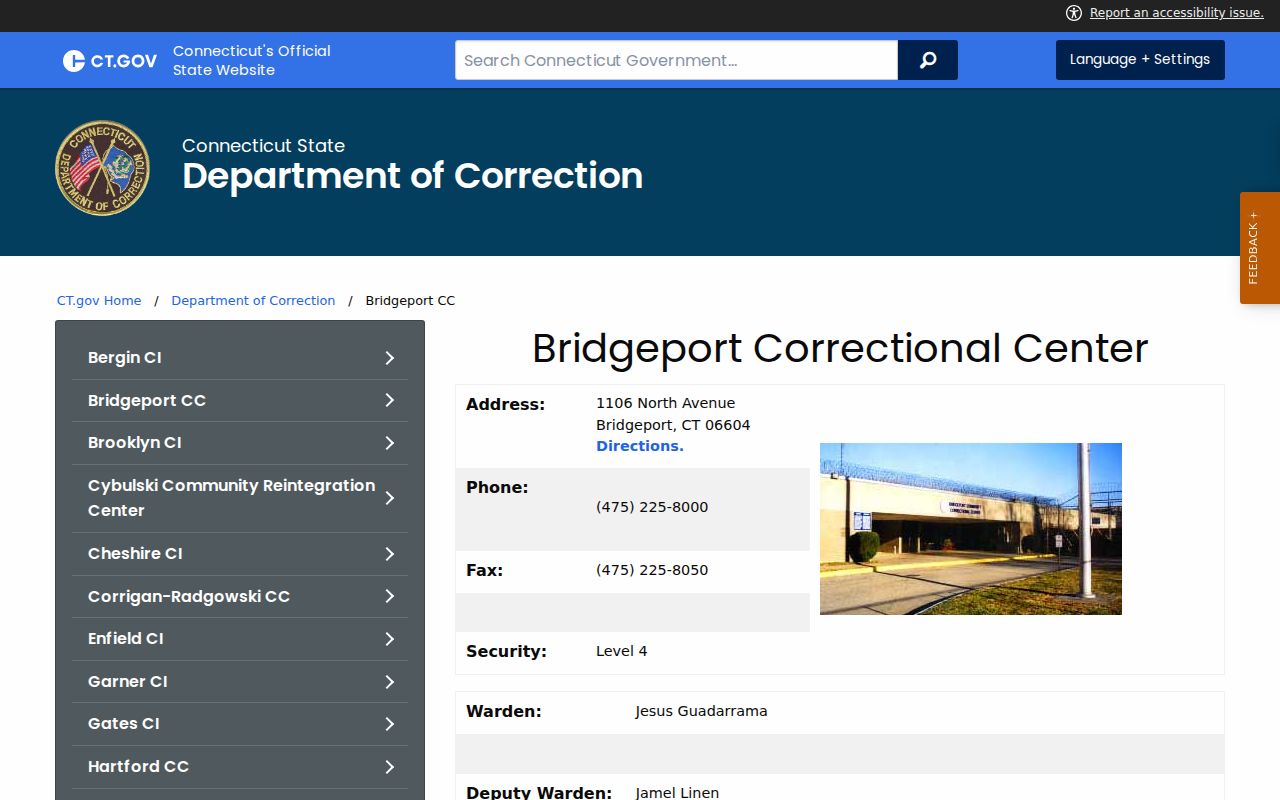
The facility is a Connecticut DOC institution, not a Danbury or Fairfield County jail.
Danbury Courthouse Has Two Dockets
Danbury has no municipal criminal court. Connecticut Superior Court at 146 White Street houses Geographical Area No. 3 and the Danbury Judicial District. GA 3, or Part B, primarily handles misdemeanors and Class C, D, and E felonies. More serious Class A and B felonies proceed in Part A. Both tracks share the building, which can make two distinct dockets look like one office.
The district also serves Bethel, Brookfield, New Fairfield, Newtown, Redding, Ridgefield, and Sherman. In the public lookup, the precise location choice is “Danbury Geographical Area 3 and Judicial District.” The chief clerk is the fallback at 203-207-8600.
The official Danbury courthouse page provides the local court details.
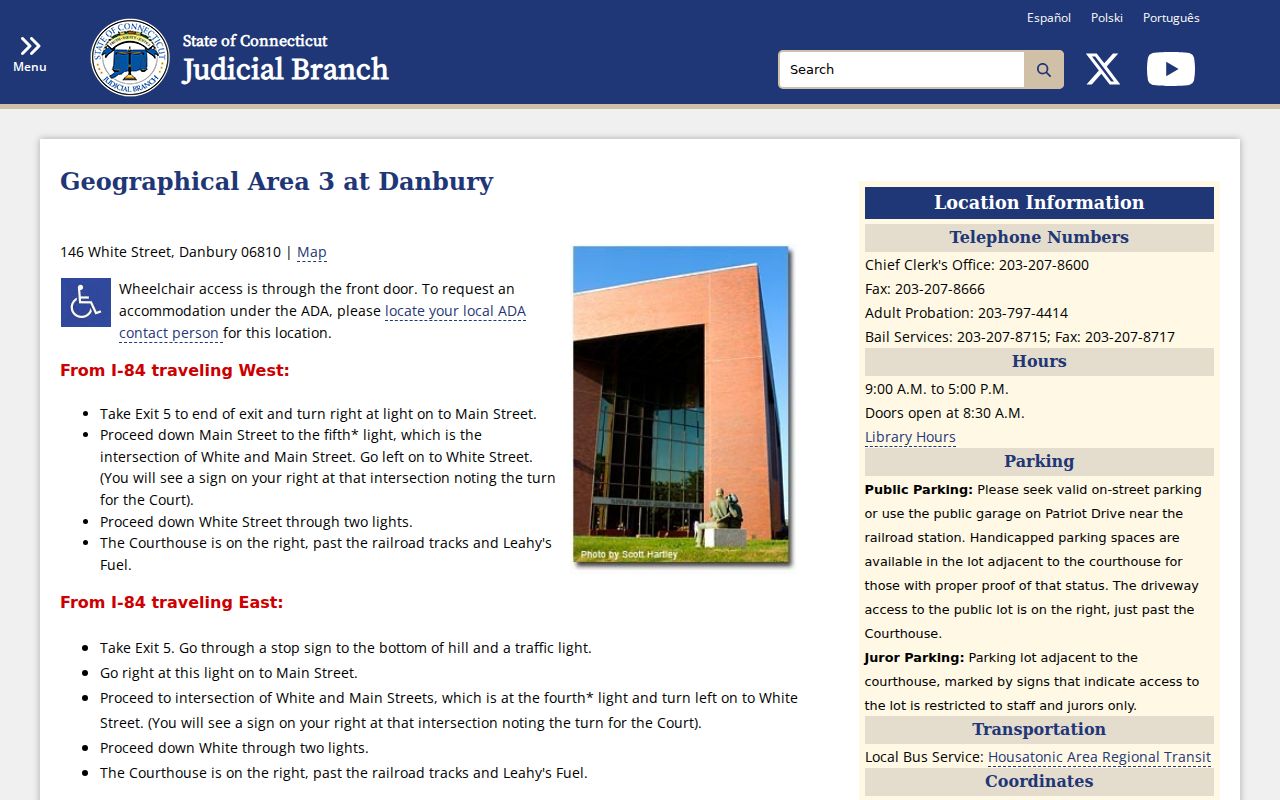
Its shared address is why the location filter includes both GA 3 and the Judicial District.
Municipal Court Records in Danbury
Because Danbury has no municipal criminal court, a search for “Danbury municipal court records” must be redirected to Connecticut Superior Court. Police citations and arrests that lead to prosecution enter the state court system. The Judicial Branch menu separates pending defendant searches, conviction searches, dockets, and case-by-docket tools.
| Court name | Connecticut Superior Court, Danbury GA 3 and Judicial District |
|---|---|
| Case tracks | Part B for most misdemeanors and Class C-E felonies; Part A for Class A-B felonies |
| Lookup | Judicial Criminal and Motor Vehicle Case Look-up |
| File contents | Filed charges, events, motions, disposition, judgment, and sentence where public |
| Offline fallback | Chief clerk or Judicial Records Center for older disposed material |
Online case information is a public-service summary. Ask for a named clerk copy or certified judgment when the document itself matters.
When a Danbury Log Lacks Outcome
A weekly police entry captures the arrest stage. Search both pending cases and convictions through the Judicial Branch criminal lookup menu. A pending search can find a current prosecution that is absent from the conviction page. A conviction search can find a disposed matter absent from the pending list.
Record the docket and displayed court location. If the case is not online, call the clerk and provide the name, date of birth, arrest date, and disposition date if known. Older disposed files may be at the Records Center. A missing web result may reflect display limits, confidentiality, erasure, an old offline file, or reporting lag.
A docket-number search is best once the number is known. Names, initials, spelling variants, and birth-year ranges can produce ambiguous results. Daily docket views answer when and where a case is scheduled, not how it ended. Ask the clerk for a named information, motion, order, judgment, or sentence document rather than expecting every criminal filing to appear as a downloadable PDF.
Where Danbury Records Go
A Danbury incident begins in the police Records and Property Division. If an arrest follows, DPD may publish a weekly summary. If prosecutors file charges, the clerk creates a GA 3 or Part A case. A reported disposition then flows toward the State Police Bureau of Identification repository. Continued custody and later parole add DOC records, while probation is handled by the Judicial Branch.
Record flow: Danbury Police › Danbury Superior Court › DESPP/SPBI, with DOC or CSSD added when custody or supervision applies.
Each handoff creates a timing gap. The police log can appear before a docket is searchable. The filed charge may differ from the arrest wording. A disposition can reach the court website before the state repository completes its update. DOC can also change a custody location after a court event. Compare dates and identifiers instead of expecting every Danbury system to agree at once.
That sequence explains why recent and final records rarely appear at the same moment. For broader routing, the Danbury criminal history overview compares each official channel.
Danbury Tip411 and Police Alerts
The Tip411 and Danbury PD app accept anonymous tips and distribute alerts. The related crime map supports incident awareness. These tools do not issue police-report copies, confirm warrants, search inmates, or report court outcomes.
The official page shows the app, alert, and map functions.
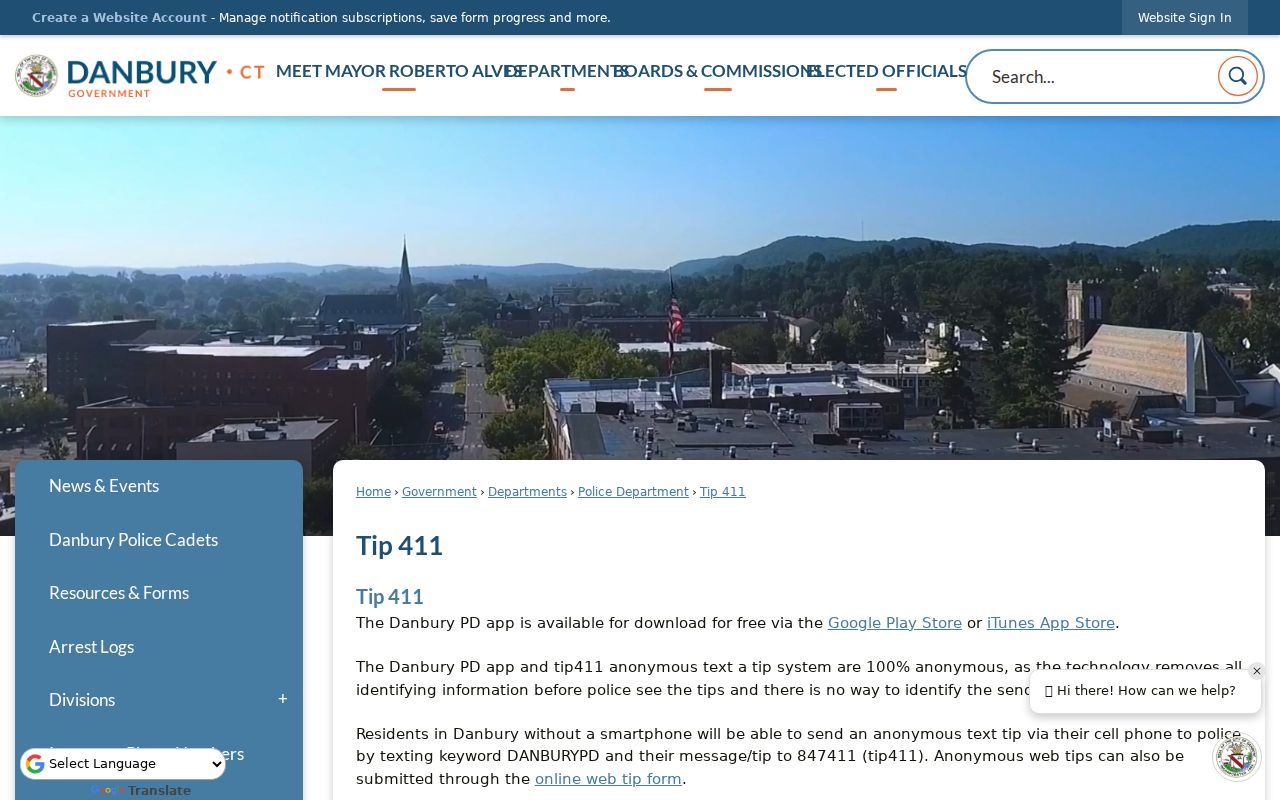
Use Tip411 to share information, but use Records or the court clerk to retrieve a government record.
Danbury Prosecution Records Changed Hands
The Criminal Justice Commission appointed Stacey Haupt Miranda as Danbury State's Attorney for an eight-year term beginning July 1, 2026. Older stable directory pages may still show the former officeholder. The appointment changes the named leader, not the courthouse address or the division between GA 3 and Part A.
Prosecutors decide what charges to file, while the clerk maintains the public court file. A police charge can therefore differ from the information filed in court. Verify the current prosecution office through the official appointment notice and use the Judicial Branch for the docket.
Victim services are another courthouse function, but they are not a public case-search database. Official prosecution channels can address victim advocacy, restitution, and notification questions. Public docket copies still come from the clerk, which keeps the custodian role clear even when several justice offices share the same Danbury building.
Public Access Rules in Danbury
Connecticut FOIA applies to Danbury Police records, but exemptions and other laws protect some investigative, victim, juvenile, Youthful Offender, erased, sealed, and confidential material. Court web display also has its own limits. A record may exist at the clerk even when it is not displayed online, while an erased record is legally different from an old record that merely falls outside a website's display period.
Key statutes:
Connecticut FOIA, CGS §1-210 provides the general access rule and exemptions.
CGS §54-142a governs criminal-record erasure.
CGS Chapter 529 supplies SPBI criminal-history authority.
Ask the originating office to explain a denial, redaction, or unavailable record. Do not infer a person's full history from one missing result.